Blog ·
What is a roguelite?
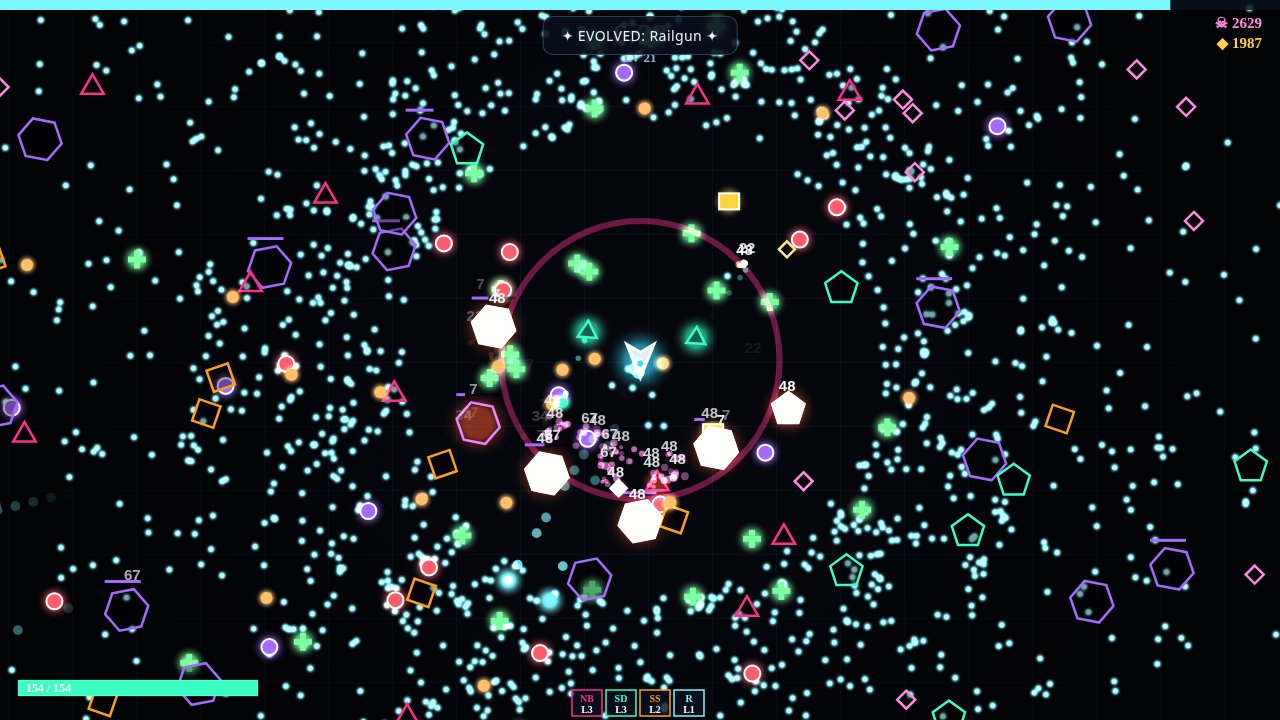
A roguelite is a game played in short runs through levels that are shuffled each time, where dying ends the run and sends you back to the start, but something you earned (currency, upgrades, new characters) stays with you and makes the next run a little easier. That last part is the "lite". In a strict roguelike, death takes everything and only what you learned carries over. Hades, Dead Cells, Rogue Legacy and Vampire Survivors are all roguelites in this sense.
Where does the word come from?
From a game called Rogue. Glenn Wichman, who created the original concept with Michael Toy while both were students at the University of California, Santa Cruz, told the story in an interview with Spillhistorie.no: "When we wrote the game in 1980, we did not know how much the world would change by 1984." Their idea was a dungeon the computer built fresh for every game, so that, in Wichman's words, it "could surprise even its creators".
Games built on that idea came to be called roguelikes: NetHack, Angband and many more. Our Rogue page and NetHack page gather the games that follow them.
What makes a game a roguelike?
The best-known definition is the Berlin Interpretation, written by the people who attended the International Roguelike Development Conference 2008. It takes five games as its canon (ADOM, Angband, Crawl, NetHack and Rogue) and lists what they share. A game does not need every item to count. The most important ones, which it calls high value factors, include:
- Random environment generation: "The game world is randomly generated in a way that increases replayability."
- Permadeath: "You start over from the first level when you die."
- Turn-based: each command is one action, and the game waits for you.
- Grid-based: the world is a grid of tiles, one creature to a tile.
- Resource management: food, potions and the like are limited and have to be used well.
Read that list again and notice how few modern "roguelikes" are turn-based or played on a grid. That gap is why a second word was needed.
How is a roguelite different from a roguelike?
A roguelite keeps the two ideas most players love, random levels and death that ends the run, and drops or bends the rest. Most are action games in real time. And most soften permadeath with what players call meta-progression: something permanent that you build up across runs.
| Roguelike (the strict sense) | Roguelite | |
|---|---|---|
| Levels | Made fresh every game | Made fresh, or reshuffled, every run |
| Death | You start over with nothing | You start over, but keep something |
| What carries over | Only what you learned | Currency, permanent upgrades, unlocked characters or weapons |
| Pace | Turn-based, on a grid | Usually real time: platformers, shooters, card games |
| Examples | Rogue, NetHack, Angband | Rogue Legacy, Dead Cells, Hades, Vampire Survivors |
One game that carried the word to a wide audience was Rogue Legacy, released by Cellar Door Games on Jun 27, 2013. Its Steam page calls it a genealogical rogue-"LITE" and explains the idea in two lines: "Each time you die, your child will succeed you", and the gold you collected upgrades your manor, "giving your next child a step up in life". More on our Rogue Legacy page.
Is Hades a roguelike or a roguelite?
By the definition above, a roguelite, though its makers use the older word. The Steam page for Hades describes a "rogue-like dungeon crawler", and the same page says you "grow permanently stronger" with the Mirror of Night, adding that "permanent upgrades mean you don't have to be a god yourself" to enjoy it. Permanent upgrades are exactly what the "lite" means.
Other makers choose the newer word. Dead Cells is, on its own Steam page, "a roguelite, metroidvania inspired, action-platformer" with "no checkpoints", where "you keep some of your progress for successive runs". Vampire Survivors describes itself as a game "with roguelite elements" in which you "gather gold in each run to buy upgrades and help the next survivor".
So in everyday use the two words overlap, and stores often tag a game with both. If you want to know which kind a game is, ask one question: when I die, what do I keep? Our pages for Hades, Dead Cells and Vampire Survivors list games inspired by each.
Why do people like roguelites?
Because every run counts for something. In a strict roguelike a bad death can wipe out hours and leave you with only a lesson. A roguelite turns even a failed run into a few coins toward the next upgrade, so there is always a reason to press "play again". Runs are also short, so one fits in a lunch break where a long campaign would not.
The price is that some of your success comes from upgrades and not from skill. Players who want the pure test still seek out the strict kind.
What roguelites can you play in your browser?
Three of our own, free, with nothing to install. We read each game's code on Nov 10, 2026 to see what it keeps when you die:
| Game | What a run is | What you keep after death |
|---|---|---|
| Neonfall | Survive neon swarms, draft weapons as you level, evolve them, face a boss every 2 minutes | Gold shards, spent on 12 permanent upgrades and 3 extra pilots |
| Last Light 2 | A bullet heaven where your light is your resource | Your records, which unlock 3 more sparks: survive 8:00, kill 300 in a run, defeat 5 bosses |
| Embertide | Dodge the shadow tide while your fire strikes on its own | Nothing: every run starts from zero, the old-fashioned way |
Neonfall is the clearest roguelite of the three. Every run pays out shards for the enemies you beat and the time you lasted, and you keep them when you die. Its Upgrades screen sells 12 permanent boosts, from more health and damage to an extra reroll at level-up, and the most expensive, Phoenix Core, brings you back at half health when you would have died. Three more pilots (Volt, Bruiser and Siphon) cost 400, 600 and 900 shards, each starting with a different weapon.
Last Light 2 keeps less, and Embertide keeps nothing at all, which makes it the closest of the three to the strict roguelike rule. Neonfall and Last Light 2 save what you keep in your browser, so it stays on the device you played on. Our post on whether browser games save your progress explains how that works, and what is a survivors-like game? covers the genre all three belong to.
Play Neonfall, or browse the hub for more games and the classics behind them.
More from the blog
 Why are browser games silent until you click?Browsers block sound on a page until you interact with it, so a web game cannot play audio before your first click, tap or key press. Here is how the rule works and why it exists.
 What is procedural generation in games?Procedural generation means a game builds its levels, maps or worlds with rules and random numbers instead of storing each one made by hand. Here is how it works, what a seed is, how Rogue, Elite, Minecraft and No Man's Sky used it, and three browser games where you can see it.
 What was the first computer RPG?The earliest computer role-playing game that still survives is pedit5, also called The Dungeon, written by Rusty Rutherford on the PLATO system at the University of Illinois in 1975. Here is how it played, the rival that followed it, the lost game called m199h, and where you can try them today.