Blog ·
What is a blobber RPG?
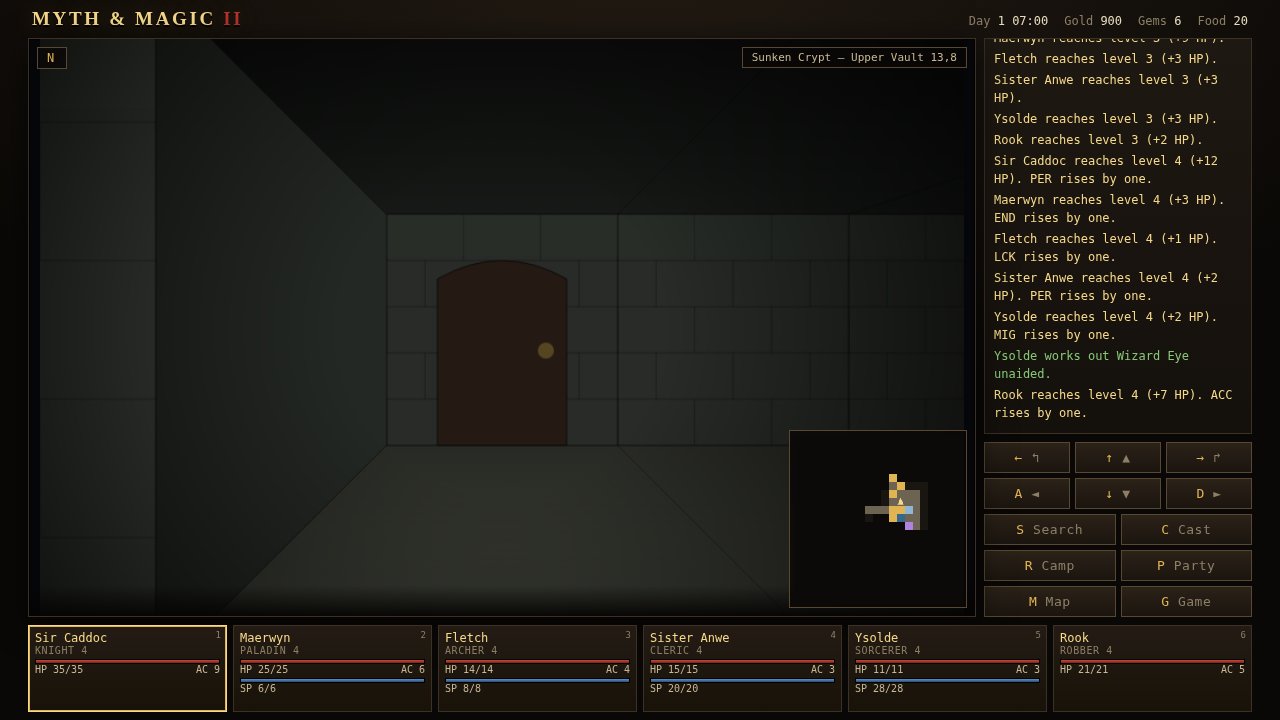
A blobber is a role-playing game seen in the first person, where you lead a whole party of adventurers who move and fight together as if they were one "blob". You step through a dungeon one square at a time, turn in 90-degree steps, and your party's portraits sit along the edge of the screen instead of on the map. Wizardry, Might and Magic, The Bard's Tale, Dungeon Master and Eye of the Beholder are the classics; Legend of Grimrock brought the style back in 2012.
Where does the name "blobber" come from?
It is a nickname from players, not from the games' makers. The glossary of The CRPG Addict, a long-running blog that plays every computer RPG in order, defines it this way: "The party moves together and fights together as if they were one 'blob.'" The same entry says the word was "allegedly coined on RPGCodex in the early 2000s" and "may have originally been used derisively but now has no particular quality attached."
So it is not an insult anymore. Today you will see "blobber" used as a plain genre label, beside the longer "first-person party dungeon crawler". Our hub files these games under their own Blobber genre for the same reason.
How does a blobber play?
The details change from game to game, but most share these parts:
| The view | First person, looking down a corridor. You never see your characters on the map |
| Moving | One square at a time on a grid, turning left or right by a quarter turn |
| The party | Several characters (often four or six), each with a class, stats and gear, shown as portraits or panels |
| Fighting | Usually turn-based in rounds; a few, like Legend of Grimrock, run in real time |
| Maps | Drawn on graph paper in the early games; many later ones draw an automap for you |
Because the party is one unit, the strategy is in who you bring and where they stand. In many blobbers only the front ranks can swing a sword, so the back row casts spells or shoots.
What were the first blobbers?
Wizardry: Proving Grounds of the Mad Overlord from Sir-Tech is the one usually named first. Its 2024 remake by Digital Eclipse is, in the words of its Steam page, "built directly on top of the original 1981 game's code", and you can even switch to the original Apple II interface while you play. The remake came out of early access on May 23, 2024, after starting on Sep 15, 2023.
The 1980s and early 1990s were the genre's golden age. Each of these has a page on our hub with its history and the games it inspired:
- Wizardry (Sir-Tech, from 1981)
- The Bard's Tale (Interplay, from 1985)
- Might and Magic (New World Computing, from 1986)
- Dungeon Master (FTL Games, from 1987), which made the dungeon run in real time
- Eye of the Beholder (Westwood Associates, from 1991), set in the world of Dungeons & Dragons
Our 1980s page and 1990s page have more from those years.
Are blobbers still made?
Yes. The best-known modern one is Legend of Grimrock by Almost Human, released on Apr 11, 2012. Its Steam page calls it "a dungeon crawling role playing game with an oldschool heart", with "highly tactical real-time combat and grid-based movement". You "create a party of four characters", and an "Oldschool Mode" turns off the automap so you draw your own maps, as players did in the 1980s.
The Wizardry remake above is another sign the style is alive: a game from 1981 rebuilt more than 40 years later for today's machines.
Can you play a blobber in your browser?
Yes, and free. We have made two, and both run in a browser tab with nothing to install. We read their code on Nov 6, 2026.
Myth & Magic II is a blobber in the tradition of Might and Magic II (1988). You lead six adventurers through a walkable town, an open moor and six dungeon levels, stepping square by square and turning a quarter at a time. There are eight classes (knight, paladin, archer, cleric, sorcerer, robber, ninja and barbarian) and 30 spells. Fights are turn-based, with the order set by each fighter's speed, and monsters start at a distance and close in over the rounds, so only your front three can strike in melee once the enemy reaches you. Press M for the automap. It saves in your browser, so you do not need an account.
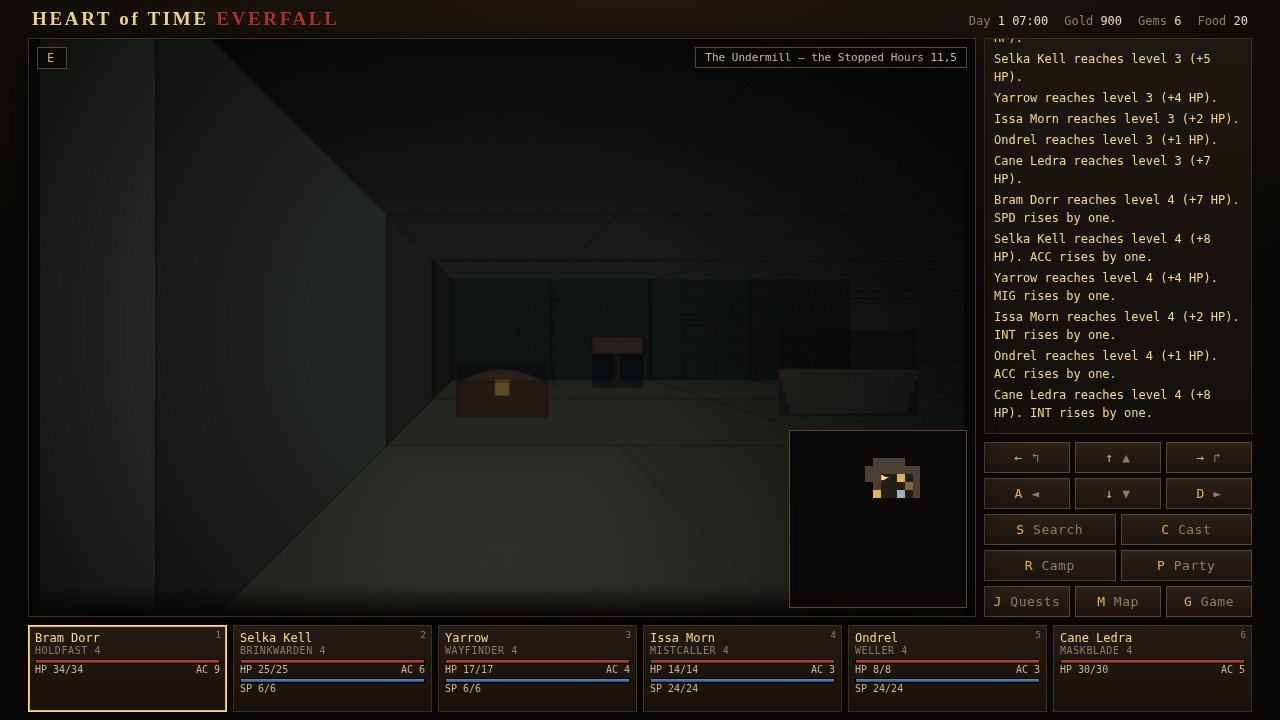
Heart of Time: Everfall is the bigger one: a first-person party RPG across eight realms, with three traditions of magic and a chronicle of quests, also with a party of six and turn-based rounds. It needs a Google sign-in, because your save (it calls it a chronicle) lives on our server and follows you from device to device.
| Myth & Magic II | Heart of Time: Everfall | |
|---|---|---|
| Inspired by | Might and Magic II (1988) | The Might and Magic series |
| Party | Six | Six |
| World | One town, a moor, six dungeon levels | Eight realms |
| Fighting | Turn-based, by speed | Turn-based, by speed |
| Saves | In your browser, no account | On your account, with Google sign-in |
Both play with the keyboard (the arrow keys to walk and turn) and have on-screen buttons for every command.
What games are like Wizardry or Might and Magic?
Every game on our hub that looks back to one of these classics is listed on its classic's page, so Might and Magic, Wizardry and Dungeon Master are good places to start. Or see every game in the Blobber genre, play Myth & Magic II now, and keep a pencil handy for the map.
More from the blog
 Why are browser games silent until you click?Browsers block sound on a page until you interact with it, so a web game cannot play audio before your first click, tap or key press. Here is how the rule works and why it exists.
 What is procedural generation in games?Procedural generation means a game builds its levels, maps or worlds with rules and random numbers instead of storing each one made by hand. Here is how it works, what a seed is, how Rogue, Elite, Minecraft and No Man's Sky used it, and three browser games where you can see it.
 What was the first computer RPG?The earliest computer role-playing game that still survives is pedit5, also called The Dungeon, written by Rusty Rutherford on the PLATO system at the University of Illinois in 1975. Here is how it played, the rival that followed it, the lost game called m199h, and where you can try them today.