Blog ·
What was the first text adventure game?
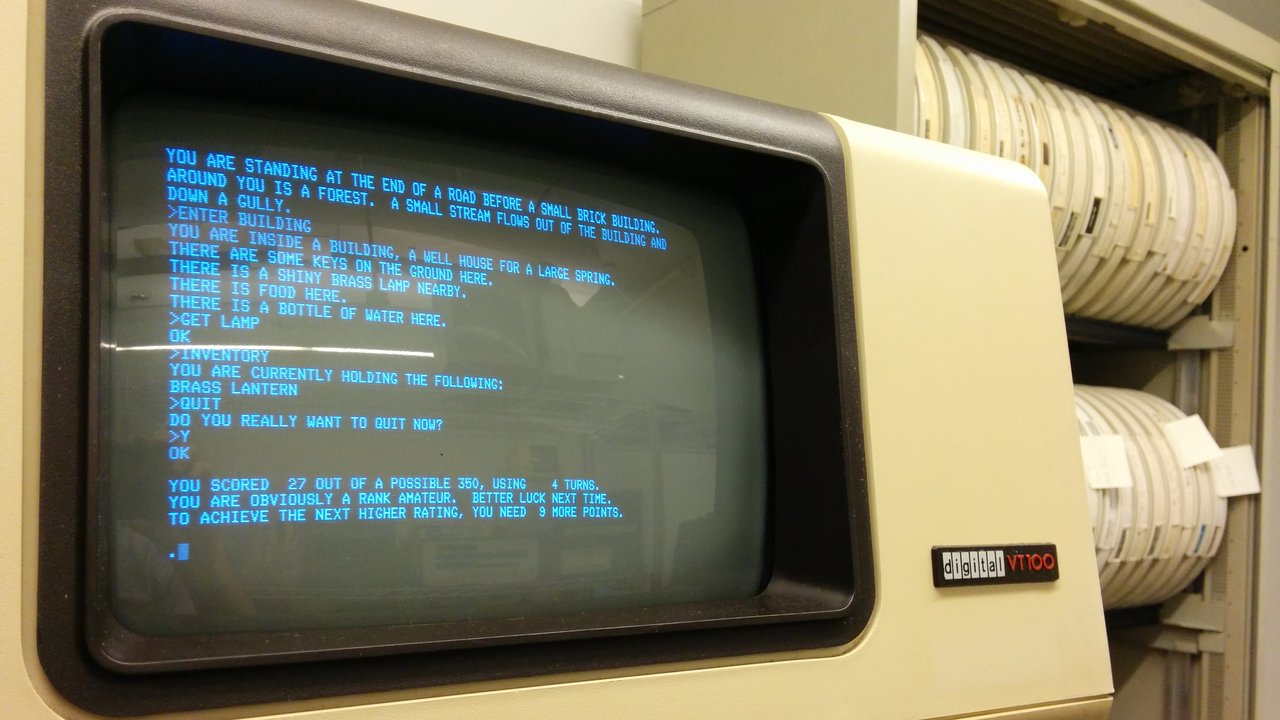
The first text adventure game is Colossal Cave Adventure, which Will Crowther wrote in FORTRAN for a PDP-10 computer during the 1975-76 school year, and which Don Woods expanded into the famous version in 1977. It is the game that gave the genre its name and its habits: a room described in words, a prompt, and two-word commands such as GET LAMP. One older program, Peter Langston's Wander (1974), may have done something similar first, but it had nothing like Adventure's influence.
What is a text adventure?
A text adventure is a game told entirely in words. The game describes where you are, you type what you want to do, and it answers. You explore, collect things and solve puzzles, usually with commands like NORTH, OPEN DOOR or GET LAMP. Today the genre is also called interactive fiction. Dennis Jerz, in his study of the original code in Digital Humanities Quarterly, describes Adventure as "the first in a series of text-based games ('interactive fiction') that emphasize exploring, puzzles, and story, typically in a fantasy setting."
Who made Colossal Cave Adventure?
Will Crowther, a programmer and caver. Jerz's DHQ article says that "as a member of the team of programmers at Bolt, Beranek and Newman (BBN), he helped create the ARPANET, the immediate forerunner to the internet." His game is set in a real place: Jerz writes that it "was based on one section of the Mammoth Cave system in southwestern Kentucky, which contains Colossal Cave", and that Crowther "remained largely faithful to the geography of the real cave." Jerz walked the cave himself in 2005 to check.
Why did he write it? Family members told Jerz that Crowther "did present his game as a post-divorce activity for his children (although he also shared it with his Dungeons and Dragons friends)" (DHQ).
When was it written?
Sources once gave dates anywhere from 1968 to 1977, but the evidence points to 1975 and 1976. Asked by email, Crowther himself put it at 1975, "give or take a year," and Jerz concludes that "Crowther wrote the game during the 1975-76 academic year and probably abandoned it in early 1976" (DHQ). His original survives as two FORTRAN files, "one for data, and one for code," recovered from a backup of Don Woods's student account at Stanford (Jerz's Colossal Cave page).
What did Don Woods add?
Most of what people remember. Woods, then a Stanford graduate student, found Crowther's abandoned program on a computer at the Stanford medical school, asked Crowther for the source code, and "by May of 1977, Woods had expanded the game to include numerous locations that he invented, along with significant technical innovations (such as scorekeeping and a player inventory)" (DHQ). That is the version that spread. As Jerz's Colossal Cave page puts it, quoting an early Infocom history: "In early 1977, Adventure swept the ARPAnet." Its lines, like "You are in a maze of twisty little passages, all alike" and the magic word XYZZY, "quickly entered hacker culture".
In 2019 the Strong museum put the game in its World Video Game Hall of Fame, calling it "originally created in 1976 by Will Crowther and expanded and modified by Don Woods" and saying it "was far and away the highest scored game" by its selection committee (The Strong).
Was there anything before it?
Possibly. Wander, by Peter Langston, is a text game system usually dated to 1974. Langston recalls writing an early version in HP BASIC and then rewriting it "in C on Harvard's Unix V5 system shortly after our band moved to Boston in 1974," and he thinks the BASIC version was "possibly from 1973" (The Renga in Blue). When a copy turned up in 2015, Jerz relayed the view that "Wander was probably the first computer game" you would recognize as a text adventure, while suggesting it may be more accurate to call it "the earliest known precursor to modern interactive-fiction development-systems" (Jerz).
There are two caveats. The original BASIC code does not survive, and the copies that do were revised later (its game Castle even knows Adventure's magic word XYZZY). And, as The Renga in Blue says, Wander "never really had the same impact as Adventure." So Wander may be the earliest text adventure, but Colossal Cave is the one the whole genre grew from.
What came next?
Adventure inspired the next wave almost at once. Jerz's DHQ article says that "when 'Adventure' reached MIT in the spring of 1977, one group of players reacted by creating 'Zork' and the company Infocom, whose text-adventure titles were best-sellers during the 80s." Scott Adams "published the lean but accessible 'Adventureland' in 1978," and Ken and Roberta Williams made "the first graphic adventure game ('Mystery House,' 1980) after Roberta got hooked on 'Adventure'."
| Game | Made by | When | Why it matters |
|---|---|---|---|
| Wander | Peter Langston | 1974, possibly 1973 | A text game system that may be the earliest of all, found again in 2015 |
| Colossal Cave Adventure | Will Crowther, then Don Woods | 1975-76, expanded 1977 | The game that started the genre and named it |
| Zork | MIT players, then Infocom | Begun in 1977 | The best-selling text adventures of the 1980s |
| Adventureland | Scott Adams | 1978 | "The first commercially available text-based adventure for a home computer" |
| Adventure (Atari 2600) | Warren Robinett | 1978 | The cave's idea turned into a graphic game, which sold a million |
| Mystery House | Ken and Roberta Williams | 1980 | The first graphic adventure game |
The Strong's own history of Adams's work agrees: "Adams's 1978 game Adventureland was the first commercially available text-based adventure for a home computer," sold as "loose cassette tapes, painstakingly copied one-by-one on his TRS-80" (The Strong).
Can you read the code of these games today?
Yes, for some of them. Crowther's original FORTRAN is what Jerz studied line by line for his article. On Nov 20, 2025, Microsoft, Team Xbox and Activision made Zork I, II and III available under the MIT License, with the code in the historical repositories for Zork I, Zork II and Zork III. Microsoft notes that the release covers the code only, not "rights to any trademarks or brands."
So which one was first?
- First text adventure most historians accept: Colossal Cave Adventure (Will Crowther, 1975-76), expanded by Don Woods in 1977.
- Possibly earlier: Wander (Peter Langston, 1974), with no original code left to prove it.
- First for home computers you could buy: Adventureland (Scott Adams, 1978).
- First graphic adventure: Mystery House (1980).
Where can you find these games on EverGamer?
Each classic in the table has its own page on our hub, with games inspired by it: start at Colossal Cave Adventure, then Zork, Adventureland and MUD, the 1978 game that took the text adventure online (we told that story in What was the first MMORPG?). Infocom's Deadline and Beam Software's The Hobbit are there too, or look around the 1970s and the 1980s.
If the cave is what draws you, Kyra Craft is a voxel adventure in your browser with nothing to install: its endless seeded world has caves underground and torches to light them. Browse the hub for more.
More from the blog
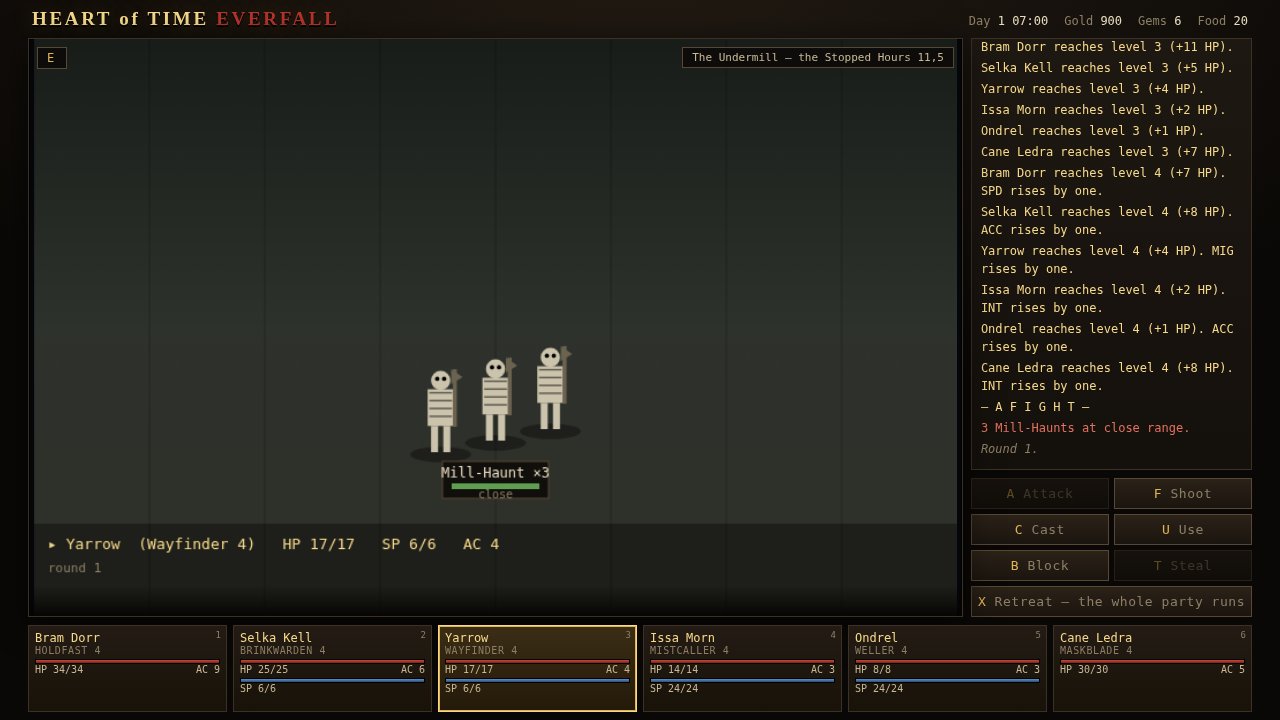 What was the first JRPG?The Dragon & Princess, made by Koei for the PC-88 in 1982, is the game most often named as the first Japanese role-playing game. The Black Onyx (1984) was the first popular one, and Dragon Quest (1986) made the genre a household name. Here is how they fit together.
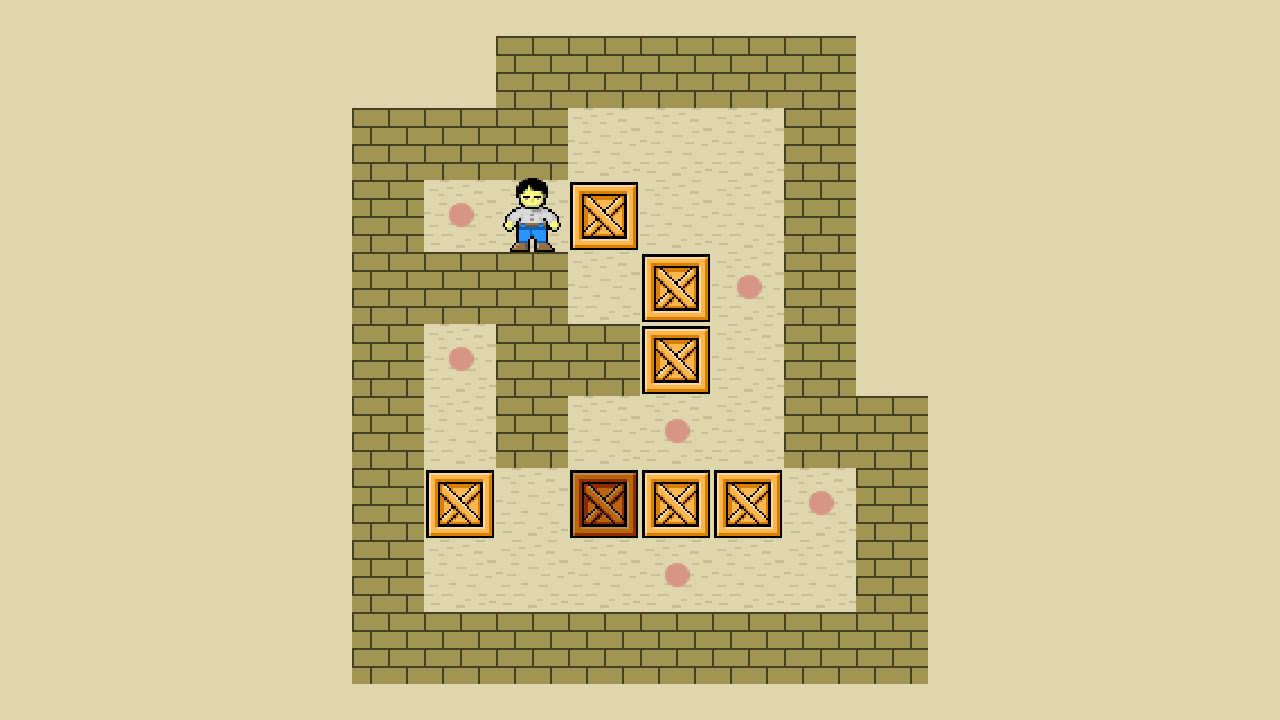 What is Sokoban?Sokoban is a 1982 box-pushing puzzle game by Hiroyuki Imabayashi of Thinking Rabbit, in which a warehouse worker pushes crates onto marked spots. Here are its three rules, who made it, why it is so hard, and games like it.
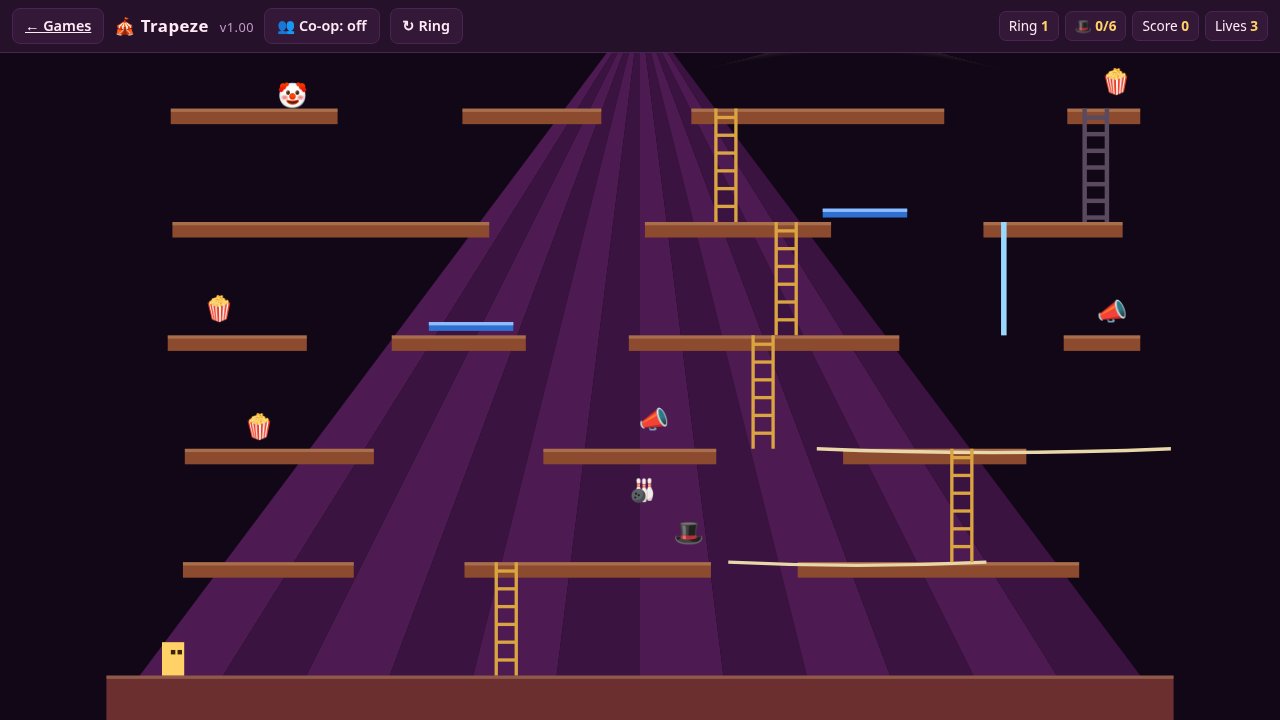 What was the first platform game?Donkey Kong (1981) is usually called the first true platform game, but Space Panic (1980) had platforms and ladders a year earlier. Here is the difference, why jumping decides it, and how the genre grew from there.