Blog ·
What is Sokoban?
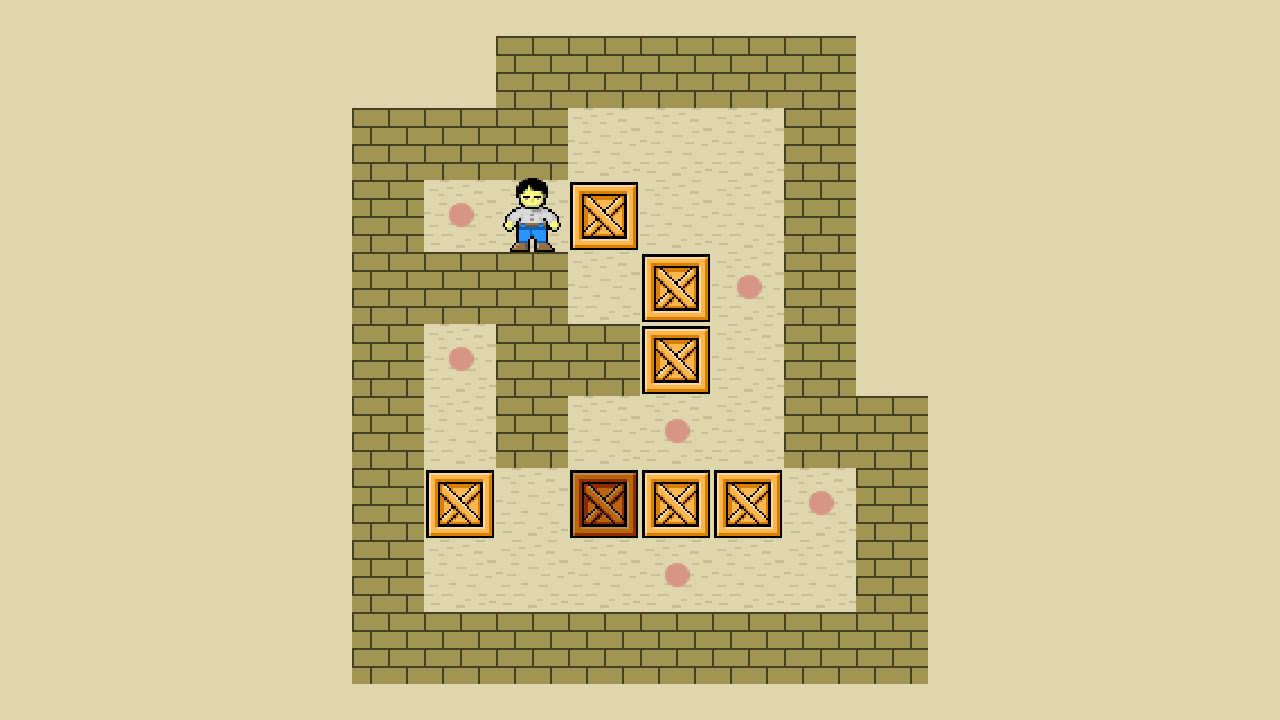
Sokoban is a puzzle game in which you push crates around a warehouse, seen from above, until every crate sits on a marked storage spot. You can push one crate at a time, you can never push two, and you can never pull. It was made by Hiroyuki Imabayashi and first sold by his company, Thinking Rabbit, in Japan in December 1982. Those three rules are the whole game, and they have kept people puzzling for more than 40 years.
What are the rules of Sokoban?
The official Sokoban site, run today by the Japanese company Falcon, puts the goal like this: you play Rabi-kun, a part-time worker, and move the warehouse's cargo to its storage spots "with as little effort as possible". Then it lists the rules:
- You can push one crate to move it.
- You cannot push two or more crates at once.
- You cannot pull a crate.
"That is all the rules of Sokoban," the page says. "As rules go, they are very simple." Its next line is the reason the game lasted: within those simple rules lies the depth of a real puzzle.
| On the board | What it is |
|---|---|
| Walls | Fixed. Nothing passes through them |
| Floor | Where you and the crates can move |
| Crates | Move only when you walk into them, one square in the direction you walk |
| Storage spots | The marked squares. Fill them all and the level is solved |
The name tells you the setting. In Japanese, 倉庫番 (Sōko-ban) means "warehouse keeper", as Wikipedia's Sokoban article explains.
Who made Sokoban?
Hiroyuki Imabayashi tells the story himself in a greeting on the official site. Sokoban was born, he writes, in the spring of 1981. He had long been curious about a character whose move was pushing things, and he put it together as a puzzle in simple BASIC. The idea he wanted was that the very cargo you have to tidy away gets in the way of your tidying.
Writing the program was quick; making good levels was hard, because, he says, he had not yet seen how deep the game was. He made a few and invited friends home to try them, quietly enjoying the sight of them stuck. He had no plan to sell it until a salesman at a newly founded software distributor saw it that winter and told him, in effect, "It will sell, so make it." In 1982 he set up Thinking Rabbit and released Sokoban.
The official history page lists the first releases: Sokoban on cassette tape for NEC's PC-8801, Fujitsu's FM-7 and NEC's PC-8001mk2, all in December 1982 and all from Thinking Rabbit, with more Japanese computers in 1983 and Sokoban 2 in 1984. The site's footer reads "©1982 HIROYUKI IMABAYASHI" and "©2001 FALCON CO.,LTD.", and says the Sokoban and Thinking Rabbit names are Falcon's trademarks.
Why is Sokoban so hard?
Because a crate pushed into the wrong square can never come back. Since you cannot pull, a crate pushed into a corner is stuck there forever, and so is a crate pushed against a wall with no storage spot along it. Players call this a deadlock: the level looks open, but it can no longer be solved, and the only cure is to undo or start again. Good Sokoban levels are built around these traps, so the obvious first push is often the one that loses.
Computer scientists have shown that the difficulty is real, not just a feeling. In a 1997 University of Alberta technical report, Sokoban is PSPACE-complete, Joseph Culberson proved that a Sokoban level can be built to act as a simple computer, one that "has a solution if and only if" a matching Turing machine accepts its input. That puts Sokoban among the PSPACE-complete problems, a class believed to be even harder than the NP-complete puzzles people usually point to. In 2002, Robert Hearn and Erik Demaine strengthened the result, showing that Sokoban stays PSPACE-complete even with no walls inside the warehouse to help build the traps.
In plain words: there is no known shortcut that solves every Sokoban level quickly. A solver, human or program, has to search, which is exactly what makes a good level satisfying.
How many Sokoban games are there?
Many, and its creator helped renew the series in 2015. In his greeting he writes that over more than 30 years Sokoban was ported, by Thinking Rabbit and under license, to a great many machines, and that in 2015 it was renewed with fans and Falcon. The official lineup shows where it lives today:
- Windows: new collections from 2015 on, among them Sokoban Perfect Plus, Sokoban First Step Plus and a remade Sokoban Revenge; a Complete Pack of four of them holds 906 levels in all, and Sokoban Smart (May 14, 2018) gathers 306 levels first made for phones.
- Phones and tablets: Sokoban Touch (Mar 15, 2016) for iPhone and Android, free to start, adds new sets of 20 levels with updates.
- Consoles: Minna no Sokoban, with more than 400 levels, came out for Nintendo Switch on May 23, 2019 and for PlayStation 4 on Aug 29, 2019.
The official site is in Japanese, and it does not offer a version to play in the browser.
What games are like Sokoban?
Box pushing became a building block of puzzle design, and our Sokoban page lists the games that follow it, among them RGCD's cat-themed C64 cartridge Boxymoxy, Steve Pavlina's laser-and-mirror puzzle Dweep, and Midnight Synergy's Wonderland series of push-and-switch tile puzzles.
- Rocks'n'Diamonds, a free game by Artsoft Entertainment, comes with classic levels for Sokoban as well as Boulder Dash, Emerald Mine and Supaplex, its about page says, so you can play box-pushing puzzles on Linux, Mac, Windows and Android.
- Tectonic, our own cave digger, plays in your browser and borrows Sokoban's hardest rule. We read its code on Nov 23, 2026: you can push a boulder only sideways, only into an empty space, and never pull one, which, as its comment says, "is where most of the puzzles live". The twist is that the boulders also fall, as in Boulder Dash.
How do you get better at Sokoban?
A few habits help on almost every level:
- Look before you push. Check which crates can reach which spots, and never push a crate into a corner that is not a storage spot.
- Work backward. Ask which spot must be filled last (often the one deepest in a dead end) and fill it first.
- Keep room to move. A crate against a wall can still slide along it, but only if you can get behind it. Leave yourself a path around.
- Use undo freely. If your version has an undo button, trying a line and taking it back is the quickest way through a hard level.
Sokoban is a classic of the 1980s. Our Sokoban page has the games inspired by it, and you can play Tectonic or browse the hub for more games and the classics behind them.
More from the blog
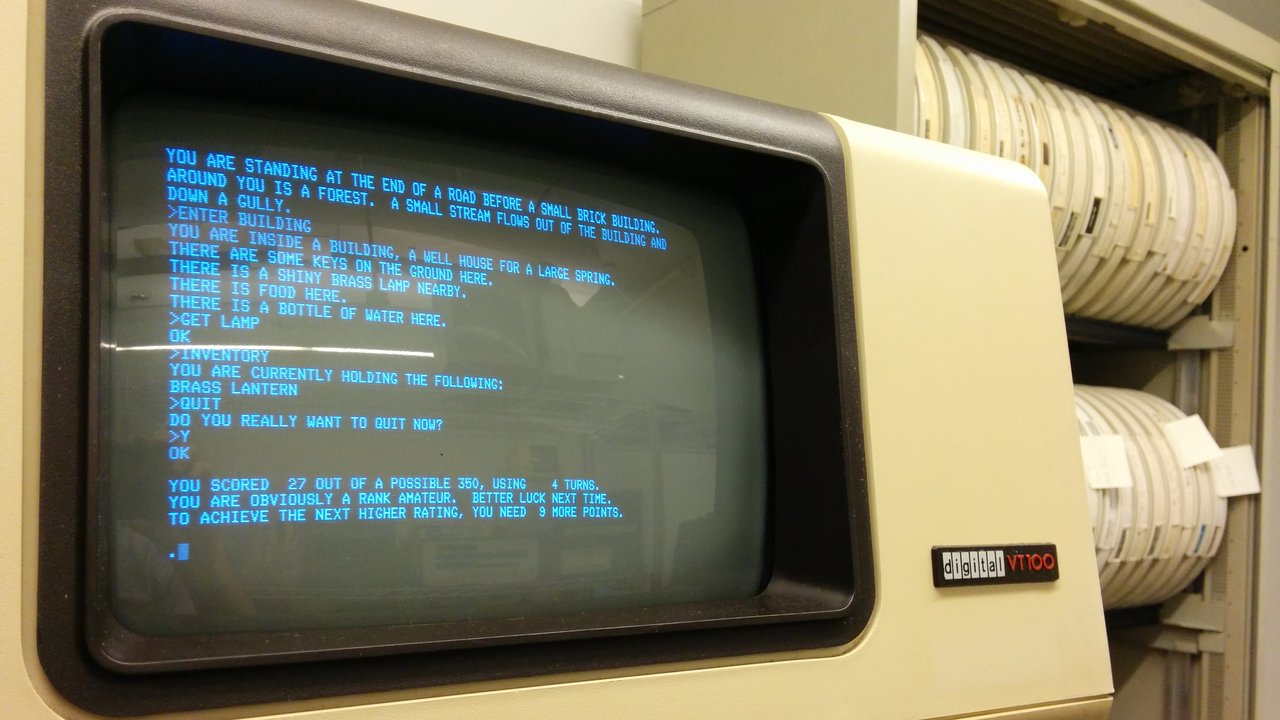 What was the first text adventure game?Colossal Cave Adventure, written by Will Crowther around 1975 and expanded by Don Woods in 1977, is the game that started the text adventure. Wander (1974) may be older. Here is how the first text adventures fit together, from the cave to Zork and Adventureland.
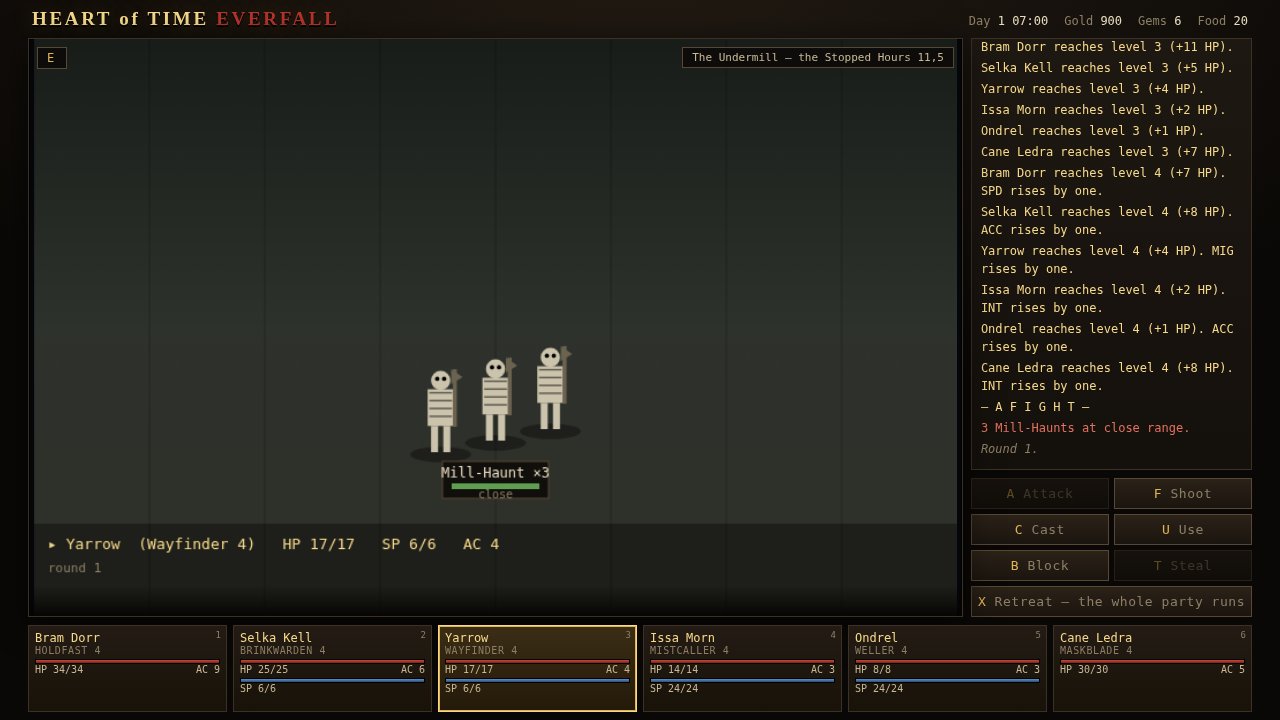 What was the first JRPG?The Dragon & Princess, made by Koei for the PC-88 in 1982, is the game most often named as the first Japanese role-playing game. The Black Onyx (1984) was the first popular one, and Dragon Quest (1986) made the genre a household name. Here is how they fit together.
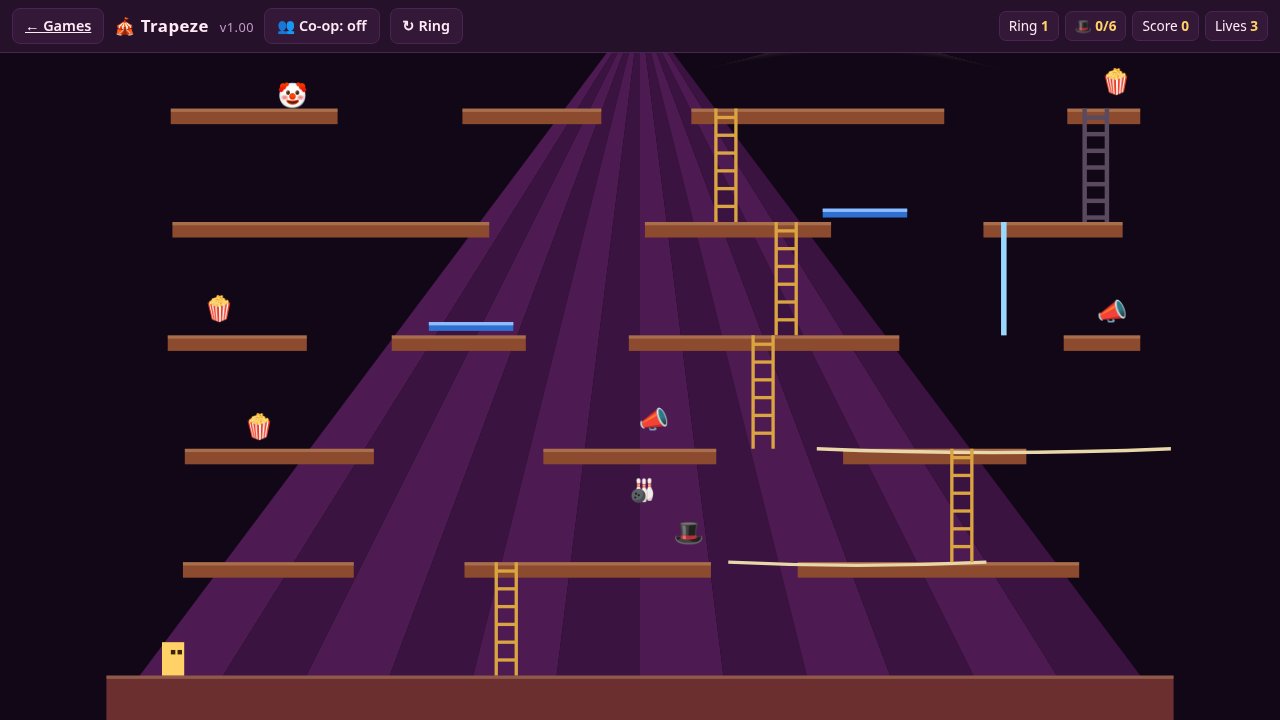 What was the first platform game?Donkey Kong (1981) is usually called the first true platform game, but Space Panic (1980) had platforms and ladders a year earlier. Here is the difference, why jumping decides it, and how the genre grew from there.