Blog ·
What was the first first-person shooter?
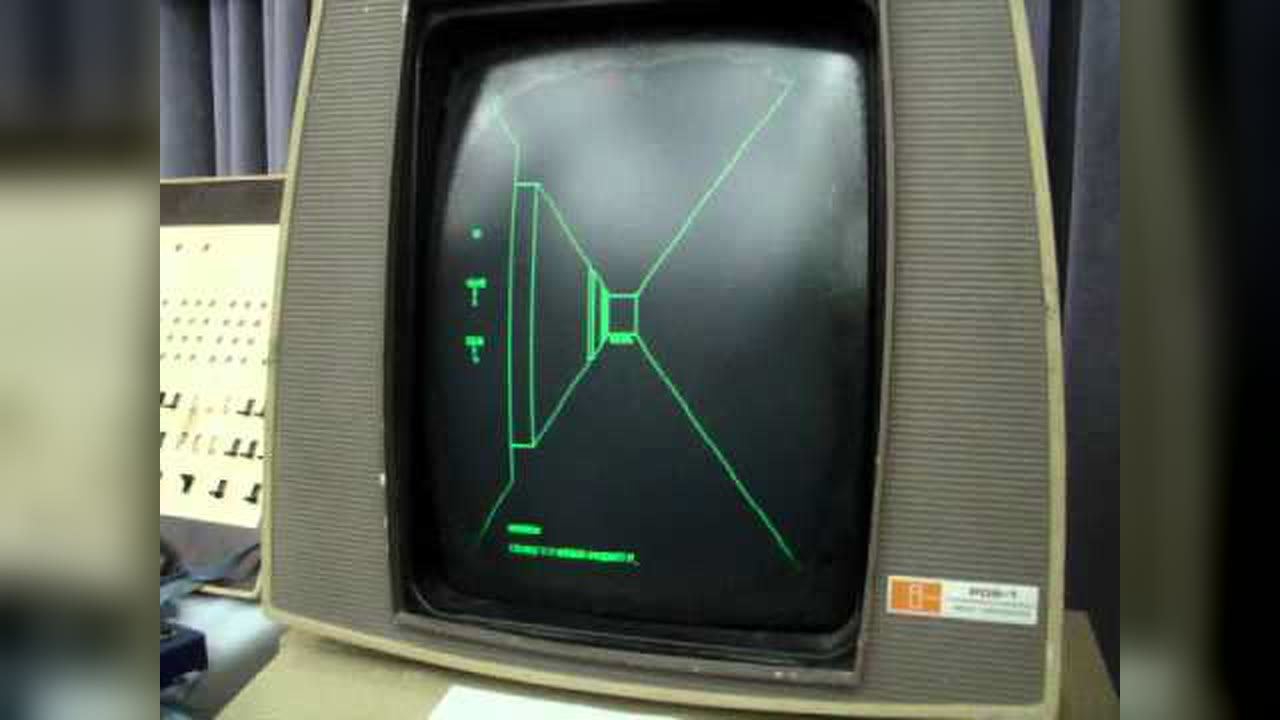
The first first-person shooter was Maze War, made in 1973 by Steve Colley, Greg Thompson and Howard Palmer, high school students working at NASA's Ames Research Center in California. Players walked a 3D maze seen through their own eyes and shot each other across two linked Imlac PDS-1 computers. That is the verdict of Guinness World Records, which names Maze War the first FPS. The one serious rival is Spasim, a 32-player space game on the PLATO network from 1974.
How did Maze War begin?
It started as a graphics experiment, not a game. In his own account for the DigiBarn Computer Museum, Steve Colley says that in 1973 he was trying to draw simple 3D shapes on the Imlac PDS-1, beginning with a rotating cube, on a slow machine "with no multiply or divide". Then he had the idea of a maze "where you were actually in the maze", stored as a 16 by 16 grid, with its halls drawn in perspective.
Exploring the maze alone "quickly became boring", Colley writes. Someone suggested putting people in it, so the team connected two Imlacs through their serial ports to send each player's position back and forth, "and soon the idea for shooting each other came along, and the first person shooter was born." Colley added the ability to peek around a corner, because it was too easy to be shot walking into a hall where someone was already waiting.
How did Maze War play?
Very differently from a modern shooter. Guinness describes the rules: the maze is a flat grid with walls of equal height, one key press moves you one square, and you turn in steps of 90 degrees. Other players appear as the letters of their user names. A hit is worth 10 points to the shooter and costs the target 5.
Greg Thompson took the game to MIT, where he and Dave Lebling expanded it and brought it to other machines. By the account Guinness gives, it soon had eight players, computer opponents and a level editor, and Guinness separately lists it as the first networked 3D shooter.
What about Spasim?
Spasim is the other candidate. It was written by Jim Bowery for the University of Illinois PLATO network, which had hundreds of graphics terminals across the US. On his own page about the game, Bowery writes that, as far as he remembers, its first release was in March 1974: a 32-player game with four planetary systems of up to eight players each, in which ships appeared to each other as wire frames and updated their positions about once a second. He calls that first version a team space battle "mixed with multi-player first-person-shooter dynamics".
So why does Maze War get the title? For years Maze War's early history had almost no documentation, and Bowery once offered a reward to anyone who could document a multiplayer 3D game before his. Guinness writes that it is now accepted that Maze War dates to the summer of 1973. Colley himself is careful: he writes that the first Maze and the two-machine version happened in 1973, though the networked version may not have come until 1974. Bowery's own page now says that Colley "may have developed a 2-player game" in 1973. The fair short answer: Maze War came first, and Spasim was the first shooter of its kind with dozens of players online.
How did the genre get from Maze War to Doom?
Neither of the first two ever reached the public: they ran on research computers. The first-person view came to arcades and home computers in the years after, and the genre as most people know it arrived with id Software in the early 1990s.
| Year | Game | What it added |
|---|---|---|
| 1973 | Maze War | A 3D maze in first person, and two players shooting each other |
| 1974 | Spasim | 32 players in space on the PLATO network |
| 1980 | Battlezone | Wire-frame tanks seen through a periscope, in arcades, per the Strong National Museum of Play |
| 1992 | Wolfenstein 3D | Fast action that, in id Software's own timeline, paved the way for the genre's popularity |
| 1993 | Doom | A shareware hit with multiplayer deathmatches and community modding, by the same timeline |
Between Battlezone and Wolfenstein 3D came other mazes seen in first person, such as 3D Monster Maze and MIDI Maze, and after Doom the same studio made Quake. The Strong museum inducted Doom into its World Video Game Hall of Fame, and Quake joined it in 2025, id Software notes.
Can you play a first-person shooter in a browser today?
Yes, with nothing to install. Claude of Duty is a first-person shooter here on EverGamer that runs in a browser tab, an open-source game by Matt Shumer. It plays nothing like a 1973 maze: you move freely and aim with the mouse instead of stepping one square at a time. If you would rather see where the genre came from, the 1970s and 1990s pages list the classics of each decade.
More from the blog
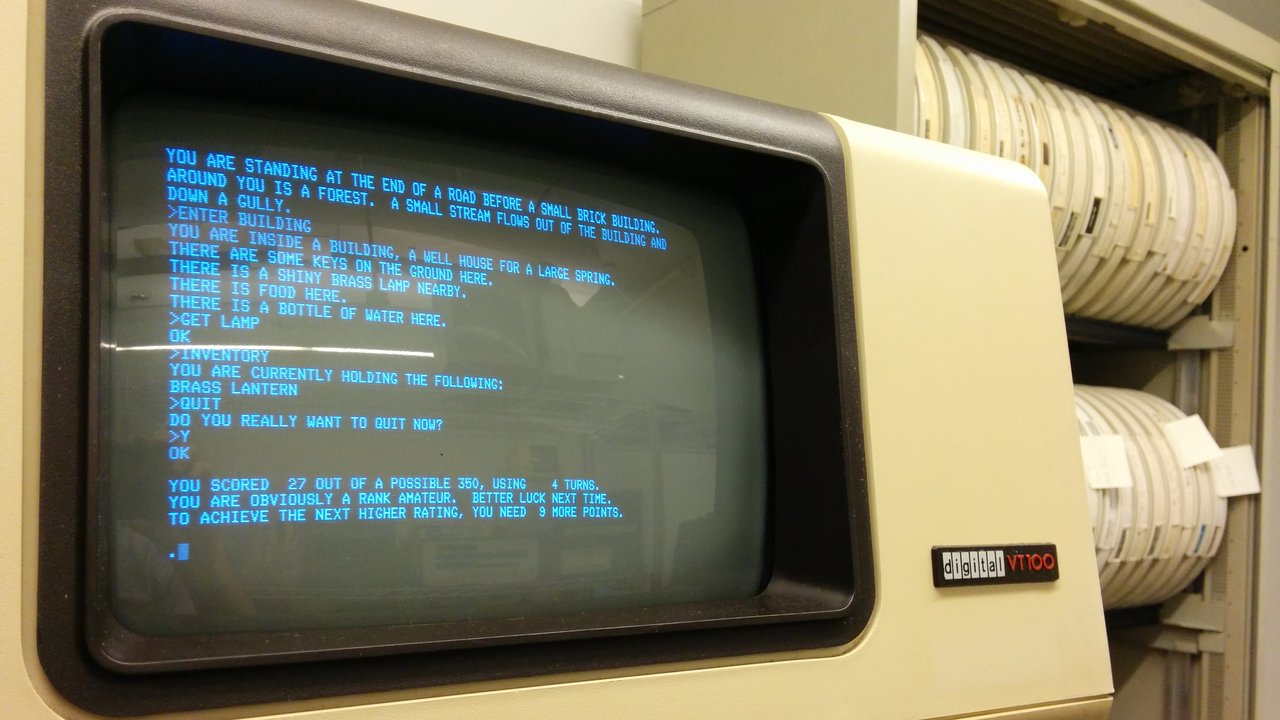 What was the first text adventure game?Colossal Cave Adventure, written by Will Crowther around 1975 and expanded by Don Woods in 1977, is the game that started the text adventure. Wander (1974) may be older. Here is how the first text adventures fit together, from the cave to Zork and Adventureland.
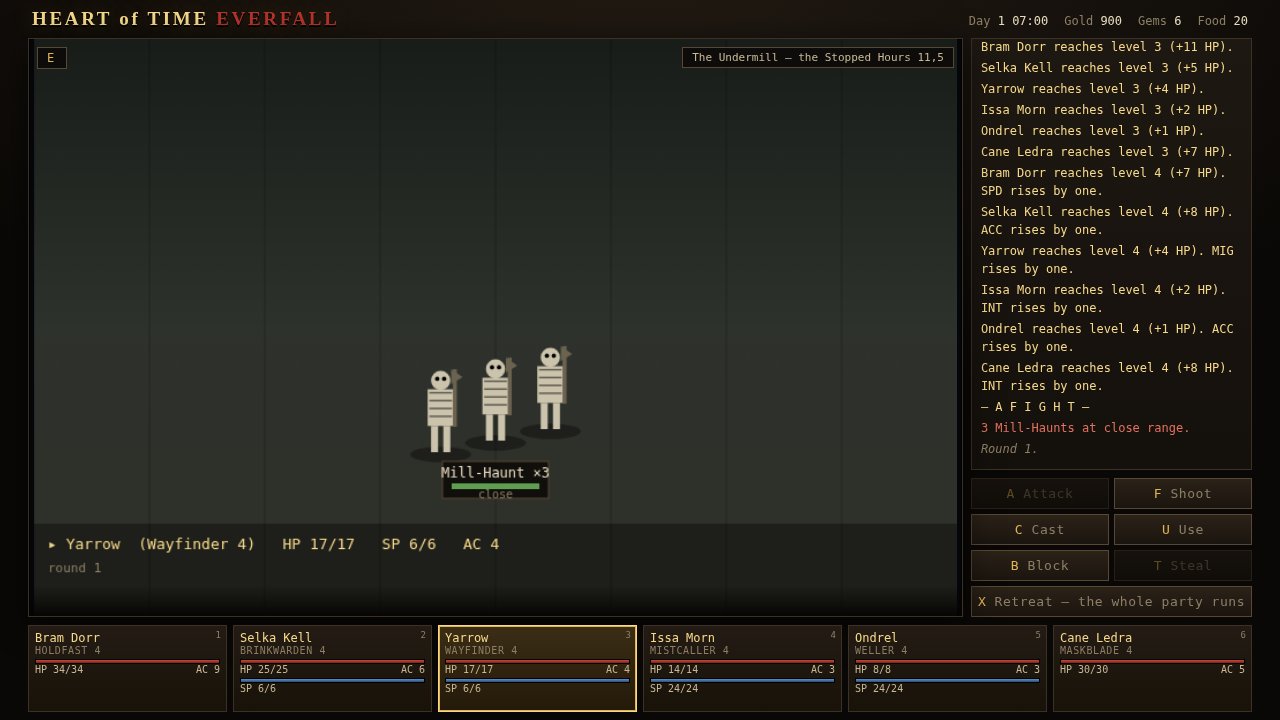 What was the first JRPG?The Dragon & Princess, made by Koei for the PC-88 in 1982, is the game most often named as the first Japanese role-playing game. The Black Onyx (1984) was the first popular one, and Dragon Quest (1986) made the genre a household name. Here is how they fit together.
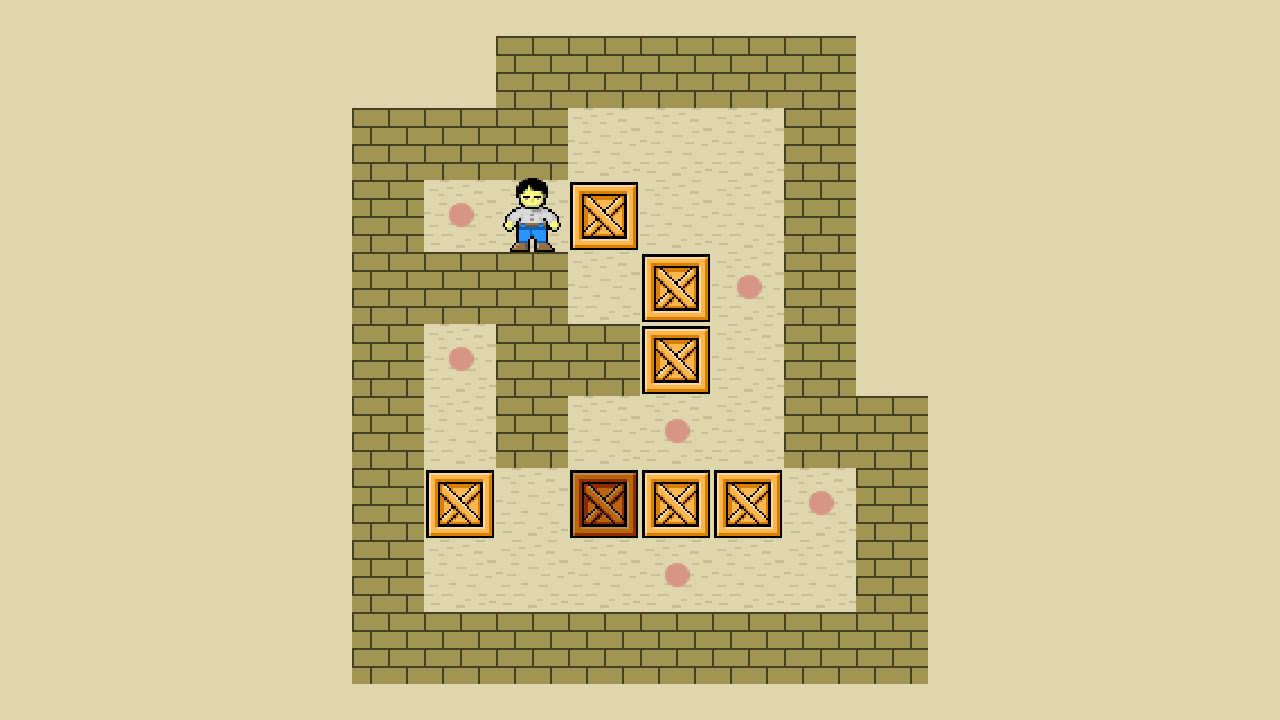 What is Sokoban?Sokoban is a 1982 box-pushing puzzle game by Hiroyuki Imabayashi of Thinking Rabbit, in which a warehouse worker pushes crates onto marked spots. Here are its three rules, who made it, why it is so hard, and games like it.