Blog ·
What is a voxel game?
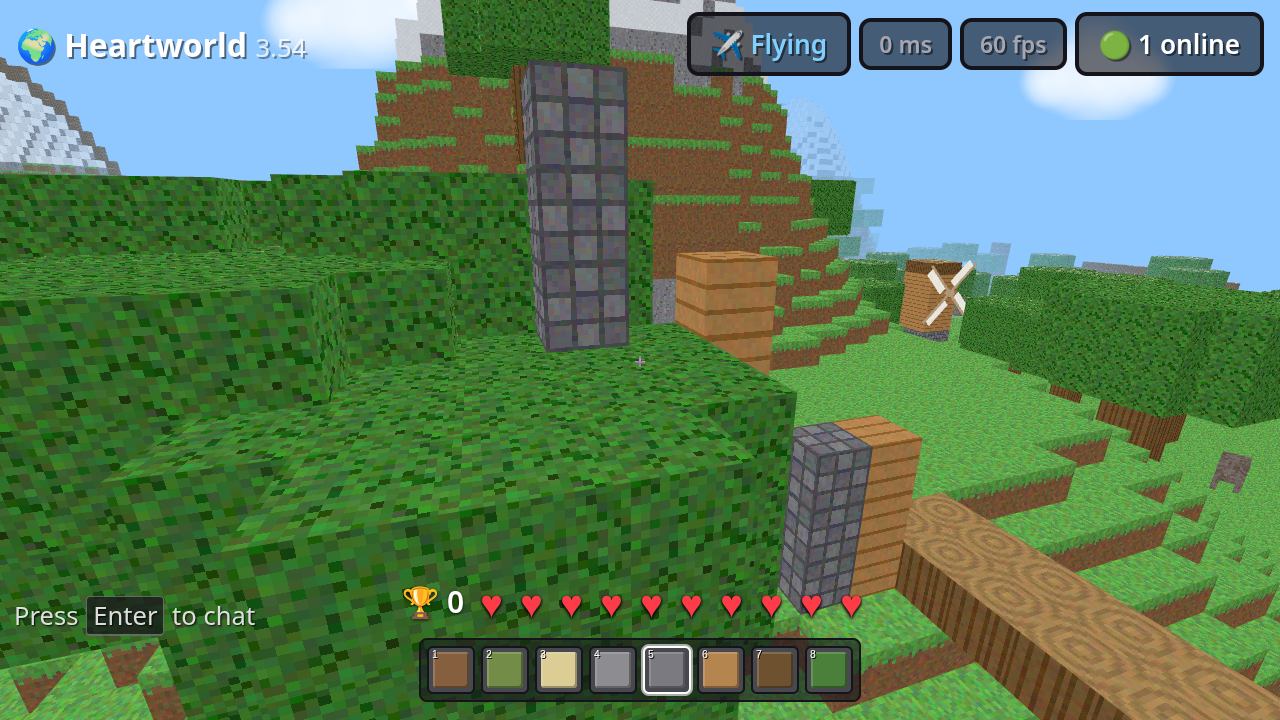
A voxel game is one whose world is made of voxels: small units of volume laid out on a 3D grid, the way a flat image is made of pixels. In most voxel games each voxel is a cube with a type (grass, stone, water, air), so the world can be dug into, built on and changed one block at a time. Minecraft made the idea famous, but voxels were in games long before it, and the word is older still.
Where does the word "voxel" come from?
It is a blend of "volume" and "pixel". Merriam-Webster's entry gives its etymology as "vo(lume) + (pi)xel", defines a voxel as "any of the discrete elements comprising a three-dimensional entity (such as an image produced by magnetic resonance imaging)", and dates its first known use to 1976.
A pixel has a position on a flat grid and a color. A voxel has a position on a 3D grid and whatever the program needs to know about that spot. In a game that is usually a block type, sometimes with light, water level or damage on top.
Is every blocky game a voxel game?
Not quite, and people argue about it. "Voxel game" gets used in two ways:
| What people mean | What it describes | Example |
|---|---|---|
| The world is stored as a grid of blocks | Every spot in the world has one type, and changing one cell changes the world | Minecraft, Kyra Craft, Heartworld |
| The world is drawn from voxels, without polygons | The renderer reads the grid (or a height map) directly | Comanche (1992) |
| Both, at a very fine size | Tiny voxels, each of which can be broken away | Teardown |
The cube look is a style. What makes something a voxel game in the first, most common sense is the grid underneath: the game knows what is at every cell, so you can remove one and the world stays consistent.
How did early games use voxels?
Long before graphics cards could draw millions of triangles, NovaLogic's helicopter game Comanche (1992) drew hilly landscapes with a technique called Voxel Space. Sebastian Macke's VoxelSpace project, which rebuilds the method in a few lines of code, explains how it worked: the terrain was two 1024 by 1024 maps, one byte each, one for height and one for color, and the engine drew the screen from back to front as vertical lines, one column at a time. The same page notes its limit: one height per position on the map, so complex shapes such as buildings or trees cannot be drawn. That is why Voxel Space is often called 2.5D rather than true 3D.
The Comanche series has its own classic page on the hub.
How do Minecraft-style voxel worlds work?
Block games like Minecraft went the other way: they keep a true 3D grid but draw it with ordinary polygons, because a graphics card is very fast at triangles. The world is far too big to keep in one piece, so it is cut into columns called chunks that load and unload around the player. Height has a fixed range: Microsoft's creator documentation says Minecraft's world height went from 0 to 256 to a range of -64 to 320 with version 1.18.
We can show the rest of the method in our own code, since two of our games are built this way:
- Kyra Craft stores each chunk as a flat list of bytes. In Kyra Craft a chunk is 16 blocks wide, 16 deep and 96 tall, kept in one
Uint8Arrayof 16 x 16 x 96 = 24,576 bytes, one byte per block. A block's number says what it is (air, stone, water, a torch), and light is a pair of levels from 0 to 15, one for the sky and one for blocks such as torches. - Heartworld keeps a map of the blocks that exist. Heartworld, our multiplayer block world, stores a block under a key like
"x,y,z", and groups the world into 16 by 16 columns so that breaking one block rebuilds only its own chunk's mesh (and a neighbor's, when the block sits on the edge). - Hidden faces are never drawn. Both games skip any cube face that touches a solid neighbor. A hill made of thousands of blocks draws only its outer skin, which is what lets a browser keep a world like this moving.
- Near chunks load first. Kyra Craft builds the chunks closest to you first and spends only a few milliseconds a frame on new ones, so walking never freezes the game while the world fills in ahead.
What about Teardown and tiny voxels?
At the other end is Teardown (Tuxedo Labs), where voxels are small enough that a wall, a car or a fence is made of thousands of them, and you can break any part. Its studio describes it plainly on the Tuxedo Labs site: "Our first game Teardown is based on ground-breaking voxel technology combined with destruction physics and raytracing." Smaller voxels look less blocky, but every one is something the game has to store, draw and simulate, so the voxel size is always a trade between detail and speed.
Can you play voxel games in a browser?
Yes, with no download. A voxel world is a good match for the web: the data is small (a byte per block in Kyra Craft) and a browser's WebGL draws the meshes on your graphics card. Try these:
- Kyra Craft: an endless world that builds itself as you explore, with caves, lakes, monsters and pets to raise. It needs a keyboard and mouse. Hub page.
- Heartworld: one shared block world where everyone online builds together. Hub page.
For the history, start with Infiniminer, another early block-mining game, look through the 2000s page, or browse the hub for more classics and the games they inspired.
More from the blog
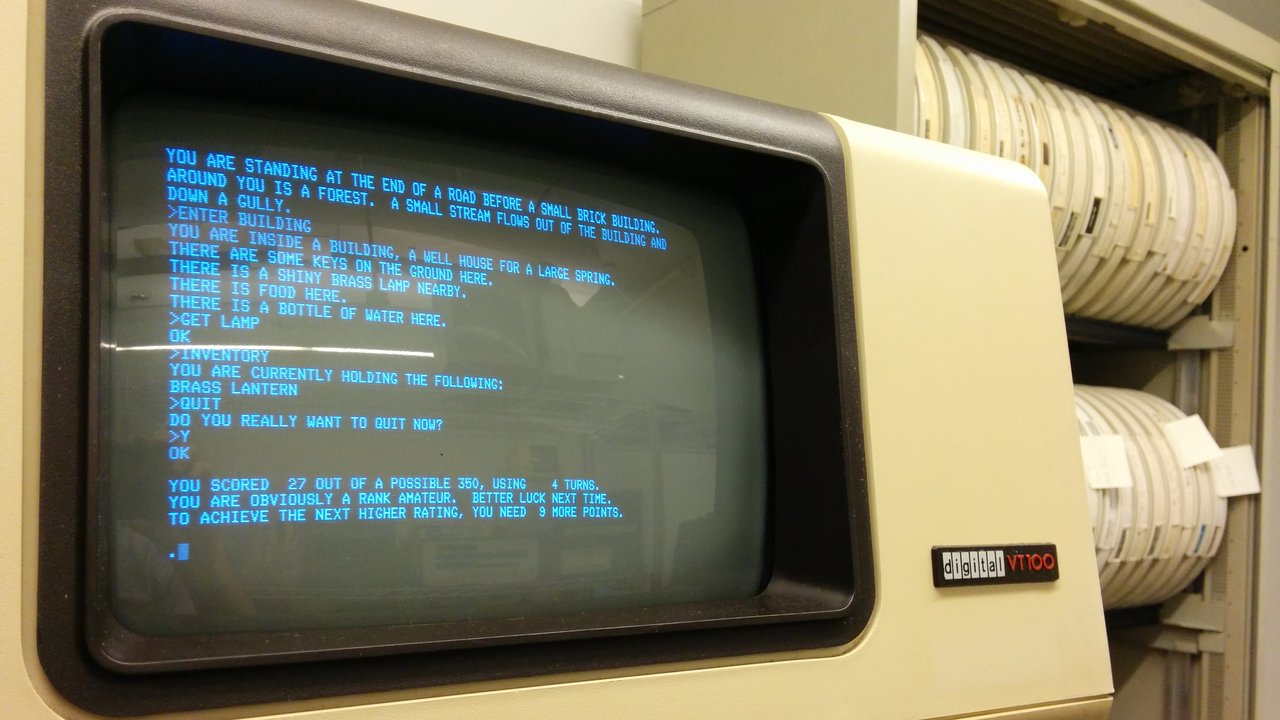 What was the first text adventure game?Colossal Cave Adventure, written by Will Crowther around 1975 and expanded by Don Woods in 1977, is the game that started the text adventure. Wander (1974) may be older. Here is how the first text adventures fit together, from the cave to Zork and Adventureland.
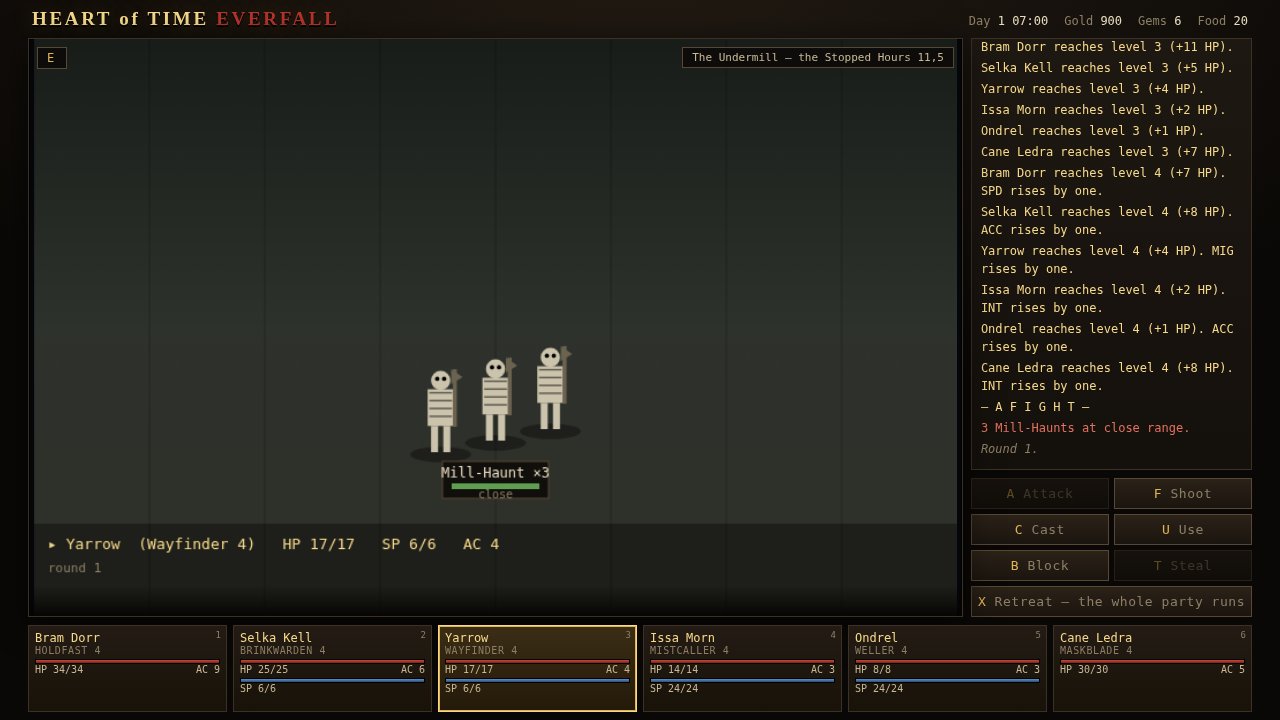 What was the first JRPG?The Dragon & Princess, made by Koei for the PC-88 in 1982, is the game most often named as the first Japanese role-playing game. The Black Onyx (1984) was the first popular one, and Dragon Quest (1986) made the genre a household name. Here is how they fit together.
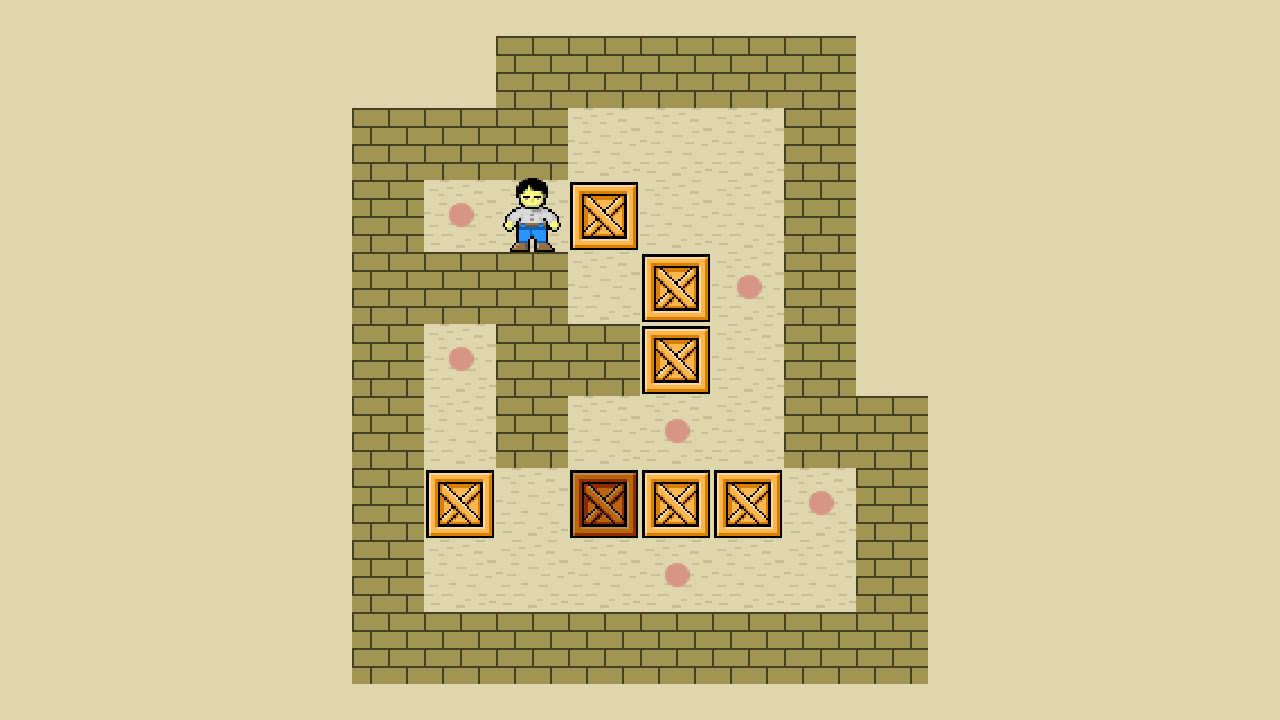 What is Sokoban?Sokoban is a 1982 box-pushing puzzle game by Hiroyuki Imabayashi of Thinking Rabbit, in which a warehouse worker pushes crates onto marked spots. Here are its three rules, who made it, why it is so hard, and games like it.